Choosing new windows often begins with a practical question: what is the difference between upvc and aluminum windows? The answer involves more than appearance. Frame material affects insulation, strength, maintenance, security, lifespan, and installation costs. It also changes how a room feels on a cold morning or during summer heat.
uPVC frames usually provide strong thermal insulation because their profiles contain multiple chambers. They are widely selected for homes seeking quieter rooms and lower heating demand. Their smooth surfaces resist rot, rust, and routine moisture. However, thicker frames can reduce the visible glass area. White uPVC is common, though modern finishes offer more color choices.
Aluminum frames are slimmer and naturally rigid. This strength supports large panes, sliding doors, and wide openings with clean sightlines. Thermal-break technology improves their insulation, but product quality varies considerably. Poorly designed frames may still feel cold around the edges. That detail is easy to overlook.
In real projects, the best choice depends on climate, window size, ventilation needs, and budget. A coastal home may require careful attention to coatings and hardware. A busy family home may value simple cleaning and durable locking points. Neither material wins every project. The comparison also depends on glass specification and installation quality. Even an excellent frame can perform poorly when fitted badly. A qualified installer should check wall conditions, drainage paths, seals, and local performance requirements. This guide examines the practical differences clearly, while acknowledging that personal priorities sometimes matter more than headline specifications. Expect trade-offs, not a perfect answer.
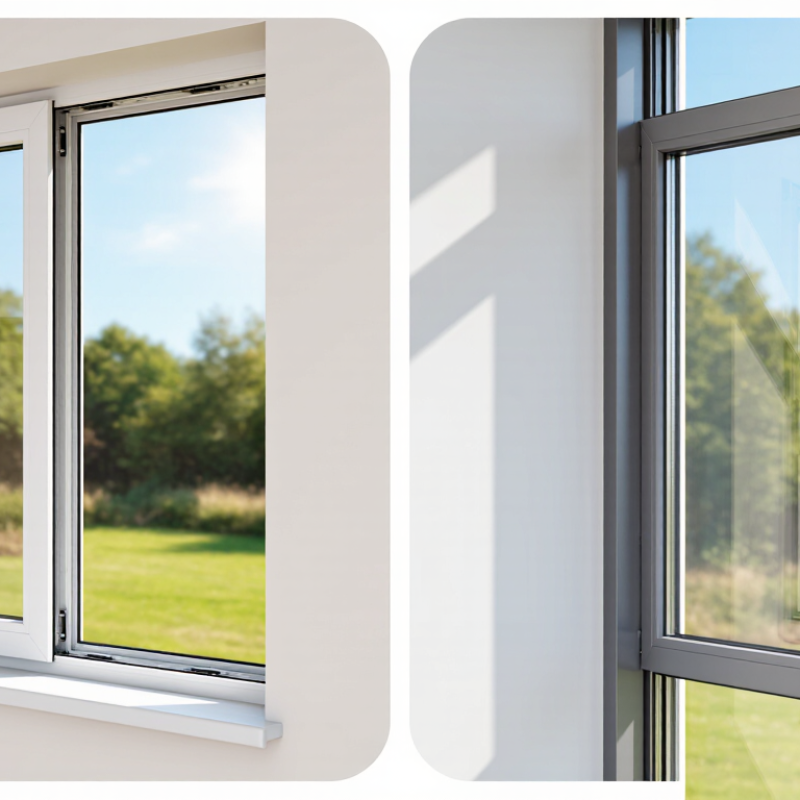
uPVC windows use unplasticized polyvinyl chloride for their frames. The material is rigid, moisture-resistant, and does not need regular painting. Many uPVC frames contain several internal chambers. These spaces help reduce heat transfer and outside noise. Steel reinforcement may be added inside larger sections for stability. A white uPVC frame often feels warmer than an untreated metal frame on a cold morning.
Aluminum windows use lightweight metal frames with a strong, clean structure. Their narrow sightlines allow more glass and daylight into a room. Modern aluminum systems usually include a thermal break. This insulating section separates the inner and outer metal surfaces. Without it, the frame can feel cold and may encourage condensation near the glass edge. Proper drainage and accurate installation matter as much as the frame material.
In practical site checks, uPVC suits homeowners who value insulation and simple maintenance. Aluminum can be more suitable for wide openings, large panes, and contemporary designs. Neither material is perfect. Poorly adjusted hardware can cause air leaks in both types. A cheap frame may also perform badly, regardless of its material. I once noticed that customers focused on color and style, while overlooking glass specification and installation quality. That choice can affect comfort more than the frame alone. The final decision should consider climate, opening size, ventilation, budget, and the installer’s documented performance data.
| Comparison Category | uPVC Windows | Aluminum Windows |
|---|---|---|
| Basic Material | Made from unplasticized polyvinyl chloride, a rigid plastic commonly reinforced with internal steel or other structural components. | Made from aluminum alloy profiles, usually finished with paint, powder coating, or anodizing for protection and appearance. |
| Thermal Insulation | Generally provides good thermal insulation because uPVC is a low-conductivity material. Multi-chamber profiles and insulated glazing can improve performance. | Aluminum conducts heat more readily than uPVC, so thermally broken frames are important for reducing heat transfer and condensation. |
| Energy Efficiency | Can offer strong energy efficiency when combined with well-insulated glass, quality seals, and correct installation. | Can also achieve high energy-efficiency levels when designed with thermal breaks and suitable insulated glazing. |
| Strength and Structural Capacity | Suitable for many residential window sizes, but very large openings may require reinforcement and careful structural design. | High strength-to-weight performance makes aluminum suitable for larger frames, wider openings, and slimmer sightlines. |
| Frame Sightlines | Usually has moderately wider frames because the material and reinforcement require more profile depth. | Can provide slimmer frame profiles, allowing larger areas of glass and a more contemporary appearance. |
| Durability | Resistant to rot, rust, and moisture. Prolonged exposure to strong sunlight and extreme temperatures can affect some products over time. | Resistant to rot and rust. Properly finished aluminum generally performs well in demanding weather conditions, including coastal environments when suitable coatings are used. |
| Maintenance | Typically requires simple cleaning with mild soap and water. Hardware, seals, and drainage channels should still be inspected periodically. | Usually requires simple cleaning and periodic inspection of coatings, hardware, seals, and drainage channels. |
| Moisture Resistance | Does not absorb water and will not rot, making it suitable for wet or humid conditions when properly installed. | Does not absorb water and will not rot. Correct drainage, sealing, and surface protection remain important. |
| Appearance and Design Options | Available in several colors and finishes, including wood-effect finishes. Color and finish options depend on the profile system. | Available in a broad range of colors and finishes, including anodized and powder-coated surfaces, with strong design flexibility. |
| Security | Can provide good security when fitted with strong hardware, reinforced profiles, secure locks, and suitable safety glass. | Can provide good security because of the rigid frame material, but performance depends on hardware, locks, glazing, and installation quality. |
| Acoustic Insulation | Can reduce outside noise effectively when paired with appropriate glazing, airtight seals, and correctly installed frames. | Can also provide effective sound insulation; the glass specification and airtightness generally have a greater effect than the frame material alone. |
| Typical Initial Cost | Often has a lower initial purchase cost for standard residential window designs, although prices vary by size, glazing, hardware, and installation. | Often has a higher initial cost, particularly for custom sizes, large openings, premium finishes, or thermally broken systems. |
| Expected Service Life | Often provides several decades of service when correctly manufactured, installed, maintained, and protected from unsuitable conditions. | Often provides several decades of service and may have a long service life when the alloy, coating, hardware, and installation are appropriately specified. |
| Environmental Considerations | Can be recycled, although collection and recycling infrastructure varies by location. Manufacturing and end-of-life processing should be considered. | Highly recyclable, and aluminum can generally be recycled repeatedly when it is collected and processed through suitable recycling systems. |
| Best Suited For | Cost-conscious residential projects, homes needing good thermal insulation, and applications where low routine maintenance is important. | Modern architectural designs, large glazed openings, slim sightlines, high structural requirements, and projects requiring extensive finish options. |
| Key Selection Factor | Check profile quality, reinforcement, glazing, airtightness, drainage, hardware, and installation standards rather than choosing by material alone. | Check whether the system has an effective thermal break, as well as the glazing, coating specification, hardware, drainage, and installation standards. |
uPVC usually insulates well because its frames contain multiple air chambers. Aluminum needs thermal breaks to reduce heat transfer. Check the whole-window U-value. Lower values generally mean better insulation.
Yes, if they include effective thermal breaks and properly sealed glass. Without thermal breaks, indoor frames may feel cold. Installation still matters greatly.
Quality aluminum frames may last around 30 to 45 years. Well-made uPVC windows often serve for 20 to 30 years. These figures vary. Sunlight, moisture, hardware, and fitting quality can change everything.
uPVC usually costs less initially. Aluminum may cost more with thermal breaks and thicker profiles. A very low quote might hide weak hardware or poor installation.
Both materials need limited maintenance. Wipe frames with a damp cloth. Lubricate hinges and locks about once a year. Wash salt deposits from aluminum near the coast.
They can work, but thicker frames may reduce visible glass area. Aluminum suits wide panels, large sliding doors, and modern facades. Slim profiles let in more daylight.
Poor sealing, blocked drainage, weak hardware, and badly fitted glass seals cause many problems. Small gaps can create drafts and outside noise. This detail is easy to miss.
Compare whole-window ratings, not frame material alone. Inspect corner joints, drainage channels, and seals. Ask about replacement parts and installation details. I would not choose by material alone.
uPVC often suits apartments and homes facing cold streets. It can improve insulation and reduce noise with suitable glazing. Aluminum may suit homes needing wider openings.
Yes, sometimes. A modest frame installed carefully may outperform an expensive frame with gaps. That is an uncomfortable comparison. The installer can matter more than expected.
Understanding what is the difference between upvc and aluminum windows helps property owners choose the right option for their project. uPVC windows are made from a rigid, low-maintenance plastic material, while aluminum windows use lightweight metal frames. uPVC typically provides strong insulation and helps reduce heat transfer, whereas aluminum offers slimmer profiles, greater structural strength, and a modern appearance that suits large glass areas.
The two materials also differ in cost, maintenance, and service life. uPVC is often more economical and requires little upkeep, but it may have fewer design options for very large openings. Aluminum is usually more expensive, yet it is highly durable, resistant to warping, and suitable for demanding commercial or contemporary buildings. Both can provide long-term performance when properly manufactured and installed. In general, uPVC is a practical choice for energy-conscious residential projects, while aluminum is better suited to buildings that prioritize strength, expansive glazing, and refined design.

 Nova Panel